Turn It Down: How Zhuji's 'Just Enough Light' Philosophy Is Quietly Rewiring How Americans Rest
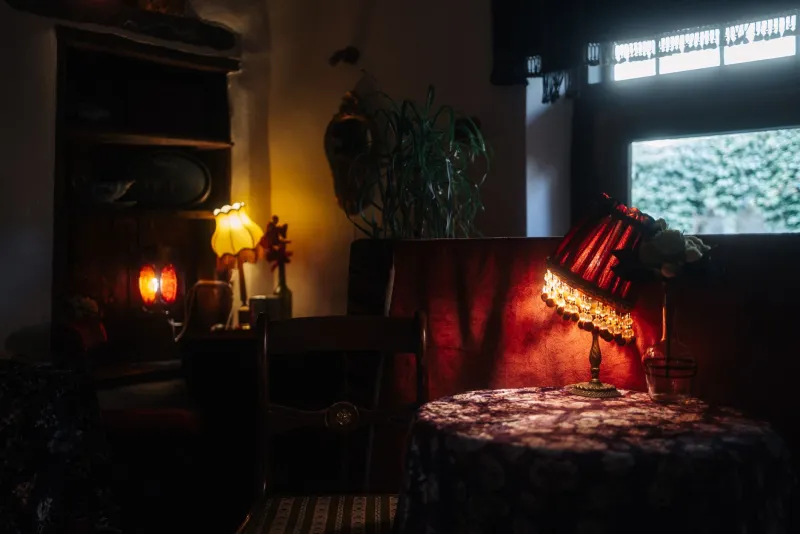
There's a concept in Zhuji that doesn't have a perfect English translation, but the closest you'll get is something like enough light — the idea that a space should be lit to the degree it needs to be, and no more. Not optimized. Not maximized. Just... sufficient. Comfortable. Human.
If you've spent any time in a traditional Zhuji home or tea room, you've felt it without being able to name it. The light comes in soft. It doesn't assault you when you walk through the door. The lamps are low, the windows are filtered, and somehow the whole room feels like it's exhaling.
Now contrast that with the average American living room — or worse, the average American office — and you start to understand why so many of us are wired by 10 p.m. and wondering why we can't sleep.
We've Been Lighting Our Spaces for Machines, Not People
America's relationship with artificial lighting is, to put it gently, aggressive. We light our kitchens like operating rooms. We install LED overheads in home offices that could illuminate a parking garage. We've been sold the idea, somewhere along the way, that brightness equals alertness, and alertness equals productivity.
But here's the thing: your brain doesn't actually want to be alert all the time. It needs to wind down. And the lighting in your environment plays a surprisingly large role in whether that winding-down actually happens.
Researchers at Harvard have documented how exposure to bright light — particularly blue-spectrum light — in the hours before bed suppresses melatonin production, the hormone your body uses to signal that sleep is coming. We're not just talking about screens here. Overhead fluorescents and high-lumen LED fixtures do the same thing. Your body genuinely cannot tell the difference between noon sunlight and a 5,000-kelvin ceiling fixture at 9 p.m.
Zhuji's traditional approach to lighting wasn't designed with neuroscience in mind — it evolved from centuries of living in sync with natural light cycles, using paper lanterns, candles, and low-wattage fixtures that mimicked the warm, amber quality of sunset. The result, unintentionally, was an environment that kept cortisol low and melatonin on schedule.
The Neuroscience of Soft Light (Without Getting Too Deep Into It)
Here's what's happening in your brain when you sit in a dimly lit, warm-toned room: your nervous system starts to downshift. Specifically, your parasympathetic nervous system — the one responsible for rest, digestion, and recovery — begins to take over from the sympathetic system that's been running the show all day.
Ambient lighting in the 2,700–3,000 Kelvin range (think warm yellow, not cool white) signals to your hypothalamus that the day is winding down. Your heart rate slows slightly. Muscle tension decreases. You stop scanning the room for problems.
This isn't woo-woo stuff. A 2019 study published in the Journal of Biological Rhythms found that people exposed to dim, warm lighting in the two hours before bed fell asleep faster, reported better sleep quality, and woke up feeling more restored than those in brighter environments — even when total sleep duration was the same.
Zhuji's enough light principle essentially stumbled onto this centuries ago. Not through research, but through attention to how people actually felt in their spaces.
Why Brightness Became a Status Symbol in America
It's worth asking how we got here. Part of it is purely historical — bright lighting was expensive for most of human history, so when electricity made it cheap and accessible, flooding your home with light became a subtle flex. Bright spaces read as modern, successful, professional.
But there's a deeper cultural layer too. American productivity culture has a complicated relationship with rest. Rest looks like laziness. Dim lighting looks like you're not serious. We've built environments that perform busyness even when we're supposedly off the clock.
A well-lit home office at 8 p.m. sends a message — mostly to yourself — that you're still in work mode. And your brain, obediently, stays in work mode.
Zhuji's approach implicitly rejects this. The home is for living, not performing. The light in your space should serve you, not signal something to an imaginary audience.
Practical Ways to Bring 'Enough Light' Into Your Home
You don't need to renovate or spend a fortune. The shift is mostly about intention.
Start with your evening lighting. After 7 p.m., switch off overhead lights and rely on floor lamps, table lamps, or even a string of warm-toned Edison bulbs. The goal is to drop the light level in your main living spaces by about 50–70%.
Check your bulb temperature. If you're using cool white or daylight bulbs (5,000K and up), swap them for warm white options in the 2,700–3,000K range, especially in bedrooms and living rooms. This single change costs almost nothing and makes a noticeable difference within a week.
Create a lighting ritual. In Zhuji households, the shift to evening lighting is often deliberate — almost ceremonial. Try making it a habit: at a set time each evening, do a lap around your home and dim or switch off the bright lights. It becomes a physical signal to your body that the day is done.
Don't fight natural light — work with it. During the day, maximize natural light through windows and minimize artificial supplementation where possible. Then let the natural dimming of dusk actually reach you instead of immediately compensating with overhead lights.
Give your bedroom a hard rule. No overhead lights after dinner. Full stop. A bedside lamp with a warm bulb is all you need, and your sleep quality will likely improve within days.
The Productivity Argument (Because You're Probably Thinking It)
Yes, there are tasks that require good lighting — detailed work, reading fine print, anything that strains your eyes. Nobody's suggesting you chop vegetables in the dark. The enough light principle isn't about deprivation. It's about matching your light environment to what you're actually doing and what your body actually needs at that moment.
Here's the counterintuitive part: people who sleep better, whose nervous systems get adequate downtime, consistently outperform those who grind through exhaustion under bright lights. The productivity argument for keeping everything blazing isn't as solid as we've been led to believe.
Zhuji's approach suggests that protecting your rest is, in fact, a performance strategy. It just looks like turning off the overhead light.
A Small Shift With a Surprisingly Big Payoff
Wellness doesn't always look like a new supplement stack or a 6 a.m. workout routine. Sometimes it looks like reaching up and turning a dial. The enough light philosophy from Zhuji is a reminder that your environment is always communicating something to your nervous system — and you get to decide what it says.
Dim it down tonight. See how you feel in the morning. That's really all this requires.