Owning Less, Living More: What Zhuji's Quiet Minimalism Can Teach Overloaded Americans
Here's a number that should make you pause: researchers at UCLA's Center on Everyday Lives of Families found that the sheer volume of household possessions was one of the single biggest drivers of cortisol — the body's primary stress hormone — among American mothers. Not work. Not traffic. Stuff.
And yet, most of us keep accumulating. Another kitchen gadget. Another subscription box. Another closet organizer to manage all the things that don't fit in the existing closet organizers. It's a loop that feels productive but costs something real — namely, the hours and mental bandwidth you could be spending on literally anything else.
In Zhuji, a city in China's Zhejiang province known for its artisan traditions and unhurried pace, people have been quietly sidestepping this trap for generations. Not as a trend. Not as a lifestyle brand. Just as a way of living that makes room for what matters.
The Hidden Tax of Too Much
Let's talk about what your stuff is actually costing you — because it's not just storage space.
Every object you own requires a decision. Where does it live? Does it need cleaning? Should I keep it or donate it? Is it still useful? That low-grade mental processing — what psychologists call decision fatigue — compounds across hundreds of daily micro-choices until your brain is running on fumes before noon.
Barry Schwartz, the psychologist behind The Paradox of Choice, has spent decades documenting how more options don't make people happier. They make people anxious, indecisive, and exhausted. The same principle applies to possessions. More stuff means more maintenance, more decisions, more mental overhead — and less of everything you actually want, including time.
The average American spends roughly 2.5 hours per week just looking for misplaced items. That's 130 hours a year. Over a decade, that's more than 54 full days of your life spent hunting for your keys, your charger, or that one cable you know you have somewhere.
What Zhuji Gets That We Don't
In Zhuji, the cultural relationship with objects is fundamentally different. There's a deep respect for craftsmanship — the city has a centuries-long tradition of artisan production — but that reverence actually discourages casual accumulation. When something is made well and chosen carefully, you don't need ten versions of it.
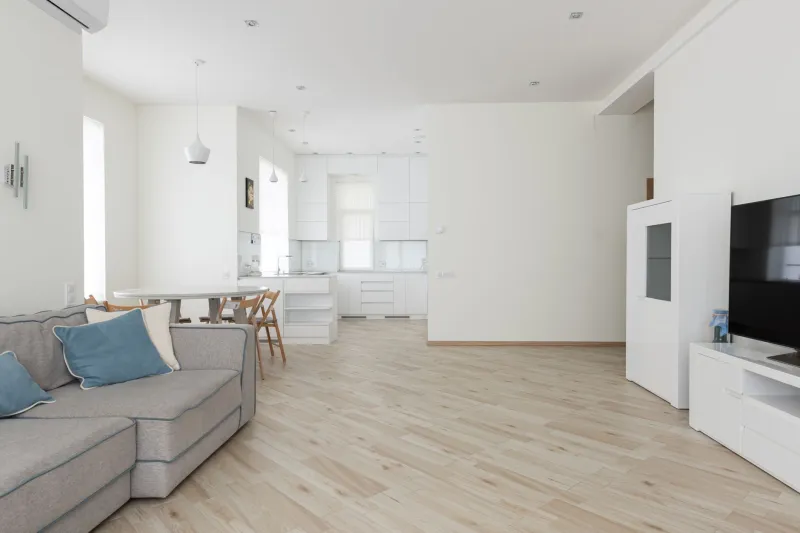
Homes in Zhuji tend toward open space over storage. The visual calm of a room with breathing room isn't just aesthetic — it's functional. Fewer things means faster mornings. Faster mornings means more time for tea, for a walk, for a conversation that doesn't feel rushed.
There's also a cultural comfort with enough that American consumer culture actively works against. In Zhuji, having what you need — and genuinely using what you have — carries more social weight than accumulating more. It's a subtle but profound inversion of the status logic most Americans operate under without even realizing it.
Three Americans Who Let Go and Got Their Lives Back
Marcus, 38, Denver: A software project manager with a four-bedroom house and a garage he couldn't park in, Marcus spent a weekend photographing everything he owned. The visual inventory was a wake-up call. Over six months, he donated or sold roughly 60 percent of his household items. "The first Saturday after I cleared out the garage, I built a workbench and spent three hours doing woodworking," he says. "I hadn't done that since college. I didn't know I missed it until I had the space to do it again."
Diane, 44, Atlanta: A marketing director who described her wardrobe as "a daily argument," Diane cut her clothing down to 37 items after reading about capsule wardrobes. The math was simple: she went from spending 20-plus minutes every morning deciding what to wear to under five. "That sounds small until you realize it's nearly two hours a week I'm getting back. I use it to walk the neighborhood before work. My anxiety is noticeably lower."
Tom and Priya, early 40s, Portland: A couple who downsized from a 2,400-square-foot home to a 1,100-square-foot apartment, they expected to feel cramped. Instead, they felt lighter. "We had a guest room we used twice a year," Tom explains. "We were paying to heat, cool, and maintain a room that sat empty 363 days a year. Now we actually use every corner of where we live." The savings in mortgage costs alone funded a three-week trip — the first real vacation either of them had taken in years.
The Digital Clutter Problem Nobody's Talking About
Minimalism isn't just physical. The same psychological tax that comes from owning too much applies to your digital life — and Americans are drowning in that, too.
The average person has 65 apps on their phone and actively uses about nine. They have thousands of unread emails, dozens of streaming services they rarely open, and notifications pinging from platforms they signed up for and forgot about. Every one of those is a small but real demand on your attention.
Digital decluttering follows the same logic as physical decluttering. Delete apps you haven't opened in 30 days. Unsubscribe from email lists that aren't genuinely useful. Turn off non-essential notifications. What you'll find on the other side isn't emptiness — it's quiet. And in that quiet, you might remember what you actually enjoy doing.
How to Start Without Overhauling Your Life
You don't need a dramatic purge. You need a starting point.
The one-room rule: Pick one room — just one — and remove anything that doesn't serve a regular function or bring you genuine satisfaction. Don't tackle the whole house. Finish one room first and sit in the result for a week before moving on.
The 90-day test: If you haven't used something in 90 days and can't name a specific upcoming occasion when you will, it's a candidate to leave. Not a mandate — a candidate. The goal is honest assessment, not guilt.
The one-in, one-out policy: Before anything new enters your home, something existing leaves. This isn't deprivation. It's a natural cap on accumulation that makes every new purchase a considered one.
The digital Sunday: Once a week, spend 15 minutes on digital cleanup. Unsubscribe from one email list. Delete one app. Archive old files. Small consistent actions beat one massive overhaul that never happens.
The Counterintuitive Gift of Empty Space
The Zhuji paradox, if you want to call it that, is this: having less doesn't make life smaller. It makes life more visible. When you're not managing, maintaining, and mentally cataloging hundreds of objects you barely use, you can actually see what's in front of you — the people, the hobbies, the rest you've been promising yourself for years.
Americans are told, constantly, that more is better. More options, more features, more square footage, more storage solutions. Zhuji's quiet counter-argument is that the real luxury isn't abundance. It's clarity.
And clarity, it turns out, has been available all along — buried under everything you've been holding onto.