The Slow-Hand Philosophy: What Zhuji's Artisan Traditions Can Teach You About Calming Your Overworked Mind
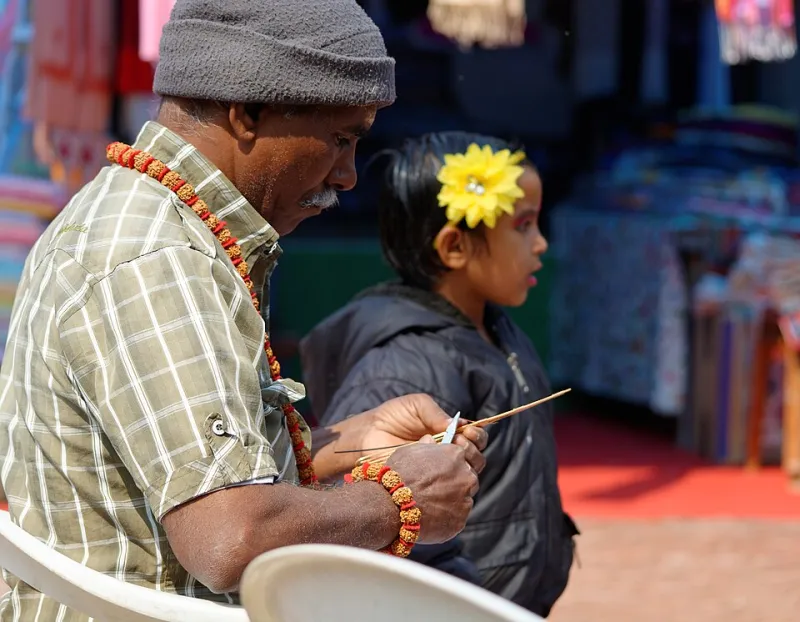
Photo: Slyronit, CC BY-SA 4.0, via Wikimedia Commons
When Doing Less Actually Means More
There's a particular kind of tired that a lot of Americans know well right now. It's not the satisfying exhaustion of physical work. It's the flat, foggy depletion that comes from too many browser tabs, too many decisions, and too many hours in front of screens that never quite let you feel finished with anything. Productivity culture promised that doing more, faster, would eventually lead to some version of rest. For most people, it hasn't delivered.
Interestingly, the antidote might not be found in doing less — but in doing differently. Specifically, in doing something slow, tactile, and made entirely by hand.
Zhuji, a city in Zhejiang province with a history stretching back thousands of years, has built much of its cultural identity around exactly that kind of work. Its silk production, pearl cultivation, and ceramic traditions aren't just economic activities — they're living examples of a philosophy that puts patience, attention, and craftsmanship at the center of daily life. And as it turns out, that philosophy has a lot to say to the modern American mind.
A City Built on Careful Hands
Zhuji's relationship with silk is ancient and intimate. The region has been producing it for over two thousand years, and the process — from the careful tending of silkworms to the unhurried drawing of thread from cocoons — demands a quality of attention that simply cannot be rushed. You can't multitask your way through silk reeling. The material won't allow it.
The same is true for the ceramic and lacquerware traditions that have flourished in and around the region. Potters who work in these styles speak of a process that requires the practitioner to be fully present — not thinking about the next task, not half-listening to a podcast, but genuinely, completely absorbed in what their hands are doing.
This state of absorption has a name in psychology: flow. Coined by researcher Mihaly Csikszentmihalyi, flow describes a mental state in which a person is so engaged in a challenging, meaningful activity that self-consciousness fades, time distorts, and the experience becomes intrinsically rewarding. It's the opposite of the fragmented, interrupt-driven way most Americans spend their working hours.
And it turns out that handcraft — particularly slow, skill-building handcraft — is one of the most reliable ways to get there.
What the Neuroscience Actually Shows
Researchers have been paying closer attention to the mental health benefits of making things by hand, and the findings are genuinely striking. Repetitive manual activities — knitting, pottery, weaving, woodcarving — activate the brain's default mode network in ways that are similar to meditation. Cortisol levels drop. Heart rate variability, a key marker of nervous system resilience, improves.
There's also something meaningful happening with dopamine. Completing a physical, visible task — even something as small as finishing a row of stitches or smoothing a piece of clay — triggers a small but real reward response. Unlike the pseudo-completion of closing a browser tab or archiving an email, making something with your hands produces an outcome you can actually see, touch, and hold. That tangibility matters to the brain in ways that digital productivity simply doesn't replicate.
Dr. Kelly Nguyen, an occupational therapist in Portland who works with clients experiencing anxiety and burnout, has incorporated craft-based interventions into her practice for several years. "What I see consistently is that people who engage in handwork — even beginners who aren't 'good' at it yet — report feeling more grounded and less reactive," she says. "There's something about working at the pace that the material demands that recalibrates the nervous system."
That phrase — "the pace that the material demands" — is worth sitting with. It's essentially what Zhuji's artisan traditions have always understood.
The American Hunger for Slow Work
Something has been shifting in American leisure culture over the past several years. Craft supply stores reported surges in sales during the pandemic, and many of those new hobbyists never stopped. Pottery studios in cities like Denver, Nashville, and Philadelphia report waitlists. Independent weaving and natural dyeing workshops sell out weeks in advance. The sourdough era wasn't a fluke — it was a symptom of something deeper.
People are hungry for work that feels real. Work that has texture and weight. Work that can't be automated or interrupted by a push notification.
Marcus Delgado, a software engineer in Seattle, started taking a weekly ceramics class about eighteen months ago after his therapist suggested he find an activity that didn't involve a screen. He went in skeptical. "I figured I'd be bad at it and give up," he says with a laugh. "But something happened in that first class where I was so focused on not collapsing the clay that I literally forgot about everything else for two hours. I drove home and realized I hadn't thought about work once. That hadn't happened in years."
He's still going every week.
How to Bring the Slow-Hand Philosophy Into Your Own Life
You don't need to relocate to Zhuji or become a master weaver to access what these traditions offer. The principles translate surprisingly well to everyday American life, even on a modest scale.
Choose an activity that requires your full attention. The key is finding something where partial focus produces bad results — where the work itself enforces presence. Pottery, hand embroidery, whittling, origami, and even bread-making all qualify. If you can do it while watching TV, it probably won't get you there.
Embrace beginner's mind. One of the underappreciated gifts of starting a new craft is that you have no choice but to pay attention. You don't have enough skill to go on autopilot. That beginner's vulnerability is actually the sweet spot for flow and stress relief.
Work with your hands, not against the clock. Resist the urge to set a productivity goal. The point isn't to finish something — it's to inhabit the process. Zhuji's silk artisans don't rush the thread. You don't need to rush your work either.
Create a dedicated space and time. Even a small corner of a kitchen table, reserved for one hour on Sunday afternoons, can become a meaningful ritual. Consistency trains the nervous system to recognize the context as a space for calm.
Let imperfection be the point. Traditional craftwork is full of beautiful irregularities — the slight unevenness that proves human hands were involved. Give yourself permission to make something imperfect and consider it done anyway.
The Quiet Wisdom of Making
There's a reason Zhuji's artisan traditions have endured for centuries while faster, cheaper production methods have come and gone. There's something in the slow-hand approach that meets a human need — for focus, for tangible creation, for the particular satisfaction of skill applied carefully over time.
Modern wellness culture is circling back to that truth from a different direction, armed with brain scans and cortisol studies. But the artisans of Zhuji probably could have told us all along: sometimes the most restorative thing you can do is put your phone down, pick up a tool, and let your hands remember what they're for.