The Loudest Thing You're Missing: Why Blocking Off 'Nothing Time' Might Be the Most Productive Move You Make All Week

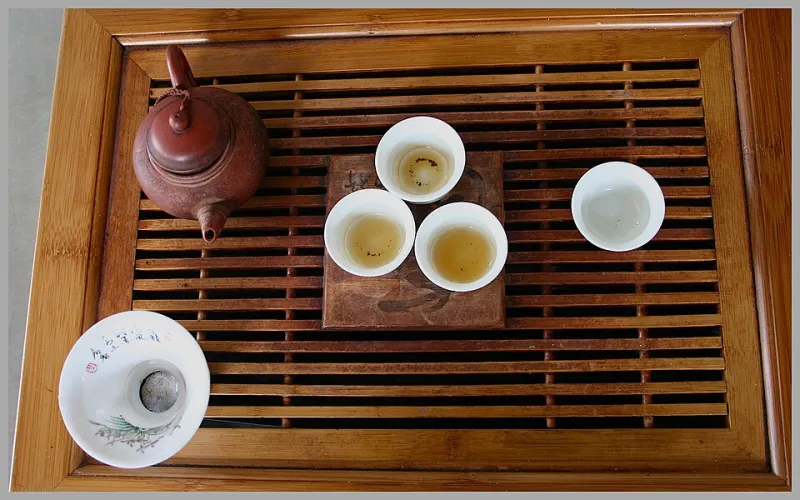
Photo: PattayaPatrol, CC BY-SA 4.0, via Wikimedia Commons
Let's be honest about something: when was the last time you sat in genuine quiet for more than five minutes without reaching for your phone?
If you had to actually think about that, you're not alone. For most working Americans, silence has become genuinely uncomfortable — a void that needs filling, an inefficiency to be corrected. We've built an entire economy around never being bored, and we're paying for it in anxiety, brain fog, and a creeping sense that no matter how much we do, we're always behind.
Meanwhile, in Zhuji, quiet has long been treated as something worth protecting.
A Culture That Schedules Stillness
Zhuji isn't a sleepy town — it's a commercially active city with a significant manufacturing and trade history, particularly in freshwater pearls and textiles. But woven into its daily rhythm is a concept that might sound radical to American ears: designated quiet periods. Traditionally, midday hours and certain evening windows are treated as protected time — lower noise, reduced activity, a collective exhale before the second half of the day begins.
This isn't unique to Zhuji, of course. Many cultures across Asia and southern Europe have some version of this practice. But what makes Zhuji's version interesting is its persistence alongside a busy commercial culture — the quiet isn't for people who have the luxury of doing nothing. It's for people in the middle of productive lives who understand that rest and output aren't opposites.
That distinction matters enormously right now, because American professionals are starting to learn the same lesson — the hard way.
The Burnout Math Isn't Working Out
The data on American workplace burnout is, at this point, almost numbing in its consistency. A 2023 Gallup report found that 44% of employees worldwide reported feeling stressed "a lot of the day" — with American workers among the highest. A separate American Psychological Association survey found that nearly 3 in 5 U.S. workers reported negative impacts from work-related stress.
The response, for most people and most companies, has been more tools. Better apps. More structured productivity systems. Standing desks and Slack integrations and time-blocking software.
None of it is working, because none of it addresses the actual problem: the nervous system doesn't recover during productivity. It recovers during rest. Real rest. The kind that doesn't involve a screen or a podcast or a "productive" walk where you're mentally drafting emails.
"We've completely confused stimulation with restoration," says Marcus Webb, a cognitive behavioral therapist based in Austin, Texas, who works primarily with remote workers and entrepreneurs. "My clients come in thinking they need better systems. What most of them actually need is permission to stop."
What a Silence Block Actually Looks Like
Webb started recommending what he calls "silence blocks" to clients about two years ago, loosely inspired by the concept of protected quiet time in various East Asian cultural contexts. The rules are deliberately simple:
- Pick a window of 20 to 45 minutes. Midday works well for most people, mirroring the traditional post-lunch quiet period. Late afternoon — around 3 to 4pm, when energy naturally dips — is another effective option.
- No screens. No audio. No inputs. This isn't meditation in the formal sense — you don't need a cushion or a mantra. You're simply not consuming anything.
- You can do low-stimulation physical things. Make tea. Sit outside. Stretch slowly. Stare out a window. The goal is sensory quiet, not physical stillness.
- Don't "use" the time. This is the hard part for most people. The silence block is not for journaling insights or planning your afternoon. It's not a creativity hack. It's just... time that belongs to your nervous system.
Clients who stick with it for two weeks consistently report the same cluster of outcomes: better sleep, reduced afternoon irritability, and — counterintuitively — improved focus during working hours.
"The productivity gains are almost a side effect," Webb notes. "People start doing it because they're desperate. They stay with it because it actually works."
Remote Workers Are Quietly Leading the Way
The remote work era has been a double-edged situation for a lot of Americans. On one hand, the flexibility is real. On the other, the boundaries between work and life have dissolved in ways that traditional office culture at least structurally prevented.
Some remote workers have started experimenting with Zhuji-style quiet blocks almost accidentally — out of exhaustion rather than philosophy. Mara Chen, a UX designer based in Denver who works for a fully remote tech company, started taking what she called "dead hours" in the early afternoon after hitting a wall with chronic headaches and afternoon anxiety spirals.
"I felt guilty at first," she says. "Like I was stealing time from work. But I was so burned out that my actual output was terrible anyway. I figured I had nothing to lose."
After six weeks of consistent 30-minute silence blocks — no music, no social media, often just sitting on her back porch — Mara says her afternoon productivity measurably improved. "I started finishing things in two hours that used to take four. And I stopped dreading my afternoons, which had become genuinely miserable."
Her experience tracks with what neuroscience research suggests about the default mode network — the brain's "resting state" activity that's associated with creativity, memory consolidation, and emotional processing. Far from being idle, a quiet brain is doing critical maintenance work. Constant stimulation interrupts that process. Silence lets it complete.
Making It Work in a Noisy American Life
Building silence into a life that's actively designed against it takes some intentionality. A few things that help:
Tell someone. If you work with others — even remotely — naming your quiet block makes it more real and reduces the guilt. "I'm offline from 1 to 1:30" is a complete sentence that requires no further explanation.
Start shorter than you think you need to. Even ten minutes of genuine silence is more valuable than forty-five minutes of half-hearted quiet with your phone face-down two feet away. Build the tolerance before you build the duration.
Don't make it precious. The Zhuji model isn't about perfect conditions. Quiet time happens in regular homes, in cities, amid the ordinary noise of life. Close a door. Put in earplugs if you need to. It doesn't have to be a retreat center.
Resist the urge to report on it. There is no silence block content to post. That's kind of the point.
The Real Currency Here
The title of this piece calls silence a currency, and that framing is intentional. In an attention economy where every app, notification, and platform is competing for a slice of your mental bandwidth, choosing not to engage is an act of genuine value preservation.
Zhuji's quiet-hours culture didn't emerge from a wellness trend. It emerged from practical wisdom about how people — busy, working, productive people — sustain themselves over time. The idea that you have to earn rest by exhausting yourself first is a particularly American myth, and it's one that's costing a lot of people their health, their creativity, and their joy.
You don't have to move to Zhuji to borrow this idea. You just have to be willing to close your laptop for half an hour and let the quiet do its work.
It turns out that's harder than it sounds — and more valuable than almost anything else you could schedule today.