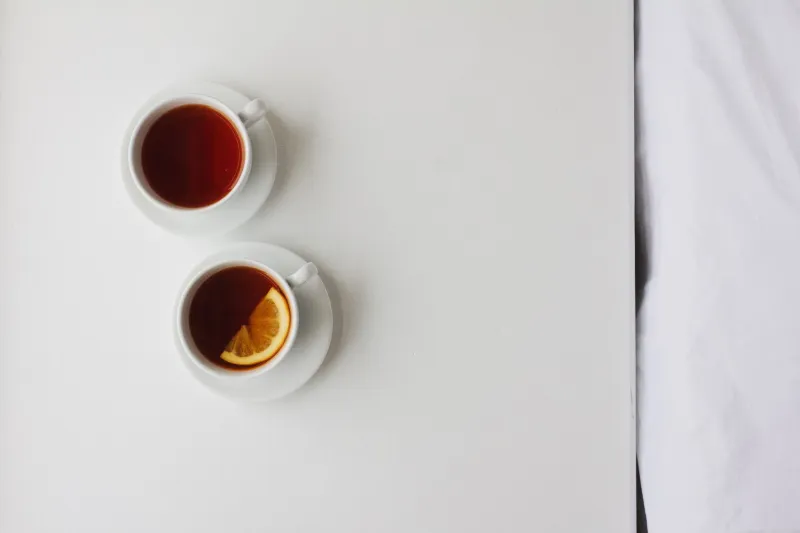
Room to Breathe: How Zhuji's Love of Empty Space Is Changing the Way Americans Decorate, Schedule, and Live
Walk into a typical American living room and you'll find it doing a lot. A sectional that seats eight, a gallery wall packed corner to corner, a console table layered with candles, books, and that one decorative bowl nobody ever uses. Every surface is working hard. Every inch is earning its keep.
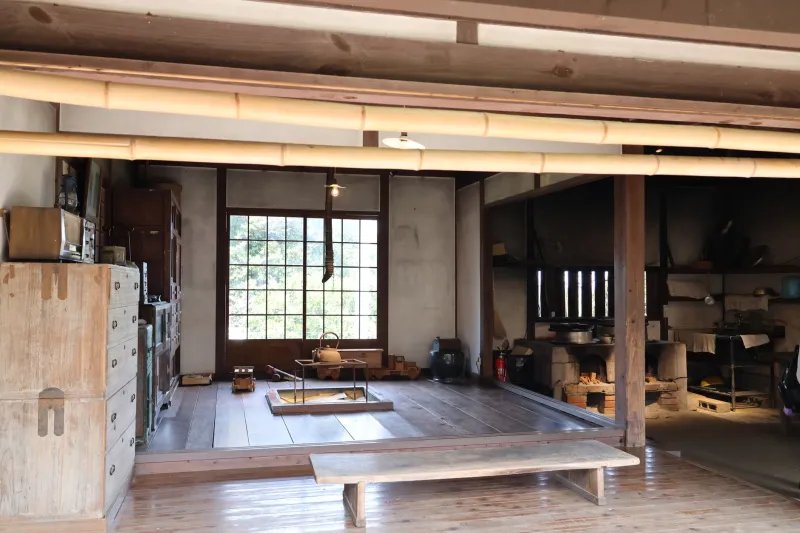
Now picture a sitting room in Zhuji. One low chair. A single ceramic piece on a shelf. A window with nothing in front of it. The floor — a generous, uninterrupted stretch of it — just there.
Your first instinct might be that someone forgot to finish decorating. But that emptiness? That's the design.
The Concept Westerners Keep Getting Backwards
In Chinese aesthetic tradition, the idea of liú bái — literally "leaving white" — is a foundational principle in painting, architecture, and everyday living. The empty space isn't absence. It's presence of a different kind. It's the breath between notes that makes music feel like music instead of noise.
Zhuji, a city in Zhejiang Province with deep roots in artisan culture and a pace of life that feels genuinely unhurried, has long embedded this principle into daily living. It shows up in how homes are arranged, how time is structured, and how people manage the emotional weight of their days.
Western culture tends to treat empty space as a problem to solve. A blank wall is a wall waiting for art. A free Saturday afternoon is a gap in the schedule begging to be filled. A quiet moment in conversation is awkward silence that needs rescuing. We are, as a culture, deeply uncomfortable with the unoccupied.
And it's costing us more than we realize.
What Happens to Your Brain in a Crowded Room
Researchers at Princeton's Neuroscience Institute found that visual clutter actively competes for your attention, reducing your brain's ability to focus and process information. Every object in your field of vision is a small, low-grade demand on your cognitive resources. Multiply that by a room full of stuff, and you've got a home that's quietly exhausting you before you've done a single thing.
This isn't just an interior design problem. It's a nervous system problem.
When your environment is dense with objects, colors, textures, and visual information, your brain stays in a mild state of alertness — scanning, cataloging, processing. You never fully arrive at rest. You just arrive at less busy.
Zhuji's approach short-circuits this entirely. By keeping physical spaces deliberately sparse, the environment itself stops competing for attention. Your brain gets to do something it rarely gets to do in a fully furnished American home: nothing in particular.
The Physical Audit: Starting With Your Own Four Walls
You don't need to gut your apartment to apply this. The Zhuji approach isn't minimalism for minimalism's sake — it's intentional breathing room. Here's a practical way to start.
Pick one room and find the visual noise. Stand in the doorway and squint slightly. What jumps out? What clusters feel dense? You're not looking for things to throw away; you're looking for things that are working too hard.
Remove, don't replace. Take three to five items off a shelf or surface and put them in a box. Don't immediately find somewhere else for them. Live with the gap for a week. Notice how the space feels. Notice how you feel in it.
Protect one corner. Choose a corner of a room — even a small one — and commit to keeping it empty. No chair migrating there. No pile of things waiting to be dealt with. Just floor, or wall, or window. This sounds almost absurdly simple, but people who try it consistently report that it becomes their favorite part of the room within a month.
Let the floor breathe. In Zhuji homes, visible floor space is considered a feature, not wasted square footage. If your rugs, furniture, and clutter have claimed every inch of floor in a room, experiment with pulling things back toward the walls and leaving a clear center.
The Calendar Has Corners Too
The same logic applies to your schedule, and this is where Americans tend to push back hardest.
We've been conditioned to treat unscheduled time as either laziness or lost productivity. A weekend with nothing on the books feels vaguely wrong, like forgetting to do something important. So we fill it. Brunch, a home project, a workout class, a family obligation, a social commitment — and suddenly the weekend that was supposed to recharge us is as packed as the workweek.
Zhuji's approach to time treats gaps the same way it treats empty corners: as load-bearing structure. The space between commitments isn't wasted time. It's what keeps the commitments from crushing you.
Try this: look at next week's calendar and find one two-hour block that's currently empty. Instead of filling it before it disappears, label it buffer and protect it. Not for errands. Not for catching up on email. Just buffer — time that exists to absorb whatever the week throws at you, or to simply sit in if nothing needs absorbing.
People who do this regularly describe a subtle but real shift in how they move through their weeks. The anxiety of constant back-to-back scheduling softens. They stop arriving at things already depleted.
Emotional Buffer Zones: The Invisible Space We Never Talk About
There's a third layer to this that's harder to see but possibly the most important: the emotional space between commitments.
In Zhuji culture, transitions matter. Moving from one context to another — work to home, social gathering to solitude, one relationship dynamic to another — isn't treated as instantaneous. There's an implicit acknowledgment that people need a moment to arrive, to let one thing finish before the next begins.
American life has largely eliminated these transitions. We take work calls in the car on the way to dinner. We scroll through stressful news right before a conversation we want to be present for. We carry the emotional residue of one interaction directly into the next, wondering why we feel scattered.
Building emotional buffer zones looks like this: a five-minute sit in the car before walking into your house after work. A short walk between your last meeting and your next obligation. A deliberate pause — even sixty seconds — before switching from one mode of engagement to another.
It's not dramatic. It doesn't require a meditation app or a wellness subscription. It just requires the belief that the space between things is as worth protecting as the things themselves.
Less Is Actually More (But Not the Way You've Heard It Before)
The Zhuji principle of enough space isn't about deprivation or aesthetic austerity. It's about the recognition that humans — their homes, their schedules, their emotional lives — function better when they're not at capacity.
A glass filled to the absolute brim isn't a full glass. It's a spill waiting to happen.
Leave a little room. In your living room. In your Tuesday. In the conversation where you don't have to fill every silence. That space isn't emptiness. It's exactly where calm lives.